


The Market’s Biggest Warning Signal in 23 Years Just Flashed — But Don’t Panic Yet
The Market’s Biggest Warning Signal in 23 Years Just Flashed — But Don’t Panic Yet
Rich DupreyMon, June 29, 2026 at 2:48 PM UTC
0
24/7 Wall St.Quick Read -
The VXN-VIX spread hit a 23-year record of 12 points, signaling tech-specific anxiety rather than a broad market collapse.
CNN's Fear & Greed Index crashed to 24.8, a level that signals Extreme Fear, even as the S&P 500 holds 7.4% gains for the year.
Historically, when sentiment deteriorates faster than prices, markets have rewarded investors who stay diversified and target strong free cash flow.
Don't wait: the analyst who called NVIDIA in 2010 just revealed his top 10 AI stocks. See the full list FREE now.
The stock market has become noticeably more unsettled over the past month. The S&P 500 closed on Friday at 7,354, down 3.3% from its June 2 record high of 7,609. Ordinarily, a pullback of that size wouldn't attract much attention. What makes this one different is the surge in investor anxiety beneath the surface.
Volatility in technology stocks has exploded, sentiment has fallen into "Extreme Fear" territory, and options traders are paying up for downside protection at levels rarely seen outside major market selloffs. On the surface, those signals look alarming. Dig a little deeper, though, and they paint a more balanced picture than the headlines suggest.
Wall Street Is Worried About Tech, Not the Entire Market
One of the market's most unusual signals today is the widening gap between the Nasdaq-100 Volatility Index (VXN) and the CBOE Volatility Index (VIX).
Recently, that spread reached 12 points -- the widest margin in at least 23 years. That's even larger than the peaks recorded during the 2008 financial crisis and the pandemic-driven selloff in 2020.
The move has been driven almost entirely by technology stocks. Since early May, the VXN has climbed roughly 43%, while the VIX has risen just 9%. The spread is important.
Don't wait: the analyst who called NVIDIA in 2010 just revealed his top 10 AI stocks. See the full list FREE now.
The Nasdaq-100 is heavily concentrated in mega-cap technology companies such as Nvidia (NASDAQ:NVDA), Microsoft (NASDAQ:MSFT), Apple (NASDAQ:AAPL), and other AI leaders. A soaring VXN relative to the VIX suggests traders expect larger swings in those stocks -- not necessarily across the broader market. Investors appear to be reassessing lofty valuations rather than preparing for a full-scale market collapse.
24/7 Wall St.
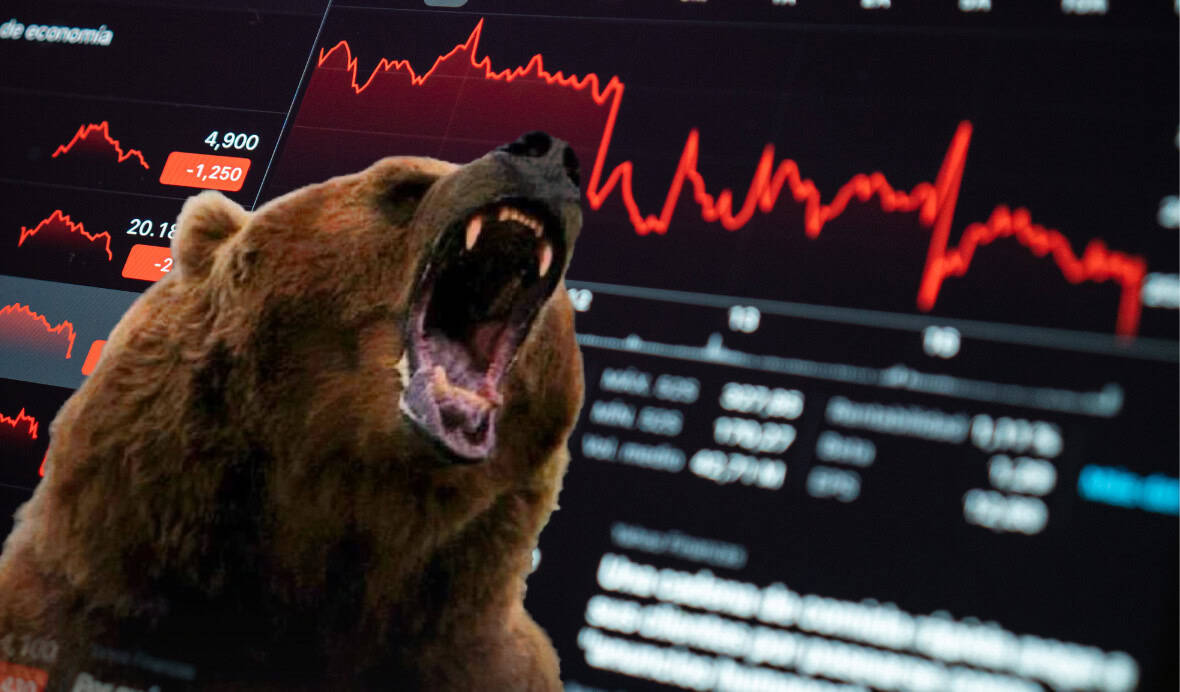
Extreme fear meets modest damage. Tech volatility just hit a 23-year outlier, creating a high-stakes disconnect that long-term investors can’t afford to ignore. © 24/7 Wall St.
Sentiment Is Far More Bearish Than Stock Prices
Investor psychology tells a similar story. CNN's Fear & Greed Index fell to 24.8, placing it firmly in the "Extreme Fear" category after sitting above 30 just one week earlier.
Advertisement
That's a remarkably pessimistic reading considering the S&P 500 remains only 3.7% below its all-time high. During previous periods when the index fell into single digits, markets were suffering far steeper declines.
Options markets also reflect growing caution. The five-day average put-to-call ratio has climbed to 0.84, its highest level since April and well above the readings that prevailed through much of the past year. Investors are clearly buying more downside protection, but they have not yet reached the panic-driven capitulation that often accompanies major market bottoms.
Fear Is Rising Faster Than the Damage
None of this means investors should dismiss the warning signs. A record VXN-VIX spread underscores just how dependent market leadership has become on a handful of large technology companies. If those stocks continue to weaken, they could weigh on the broader indexes.
At the same time, the underlying market has remained surprisingly resilient. Despite heightened volatility, the S&P 500 is still up roughly 7.4% for the year. Outside of technology, many sectors have held up well, suggesting investors are rotating rather than rushing for the exits.
Historically, periods when investor sentiment deteriorates much faster than stock prices have often created attractive opportunities once emotions cool. That's not a guarantee this time will follow the same script, but it does suggest today's fear may be running ahead of the market's actual fundamentals.
Key Takeaway
The market is clearly sending caution signals. Tech volatility has reached levels rarely seen in more than two decades, and investor sentiment has swung decisively toward fear.
Yet the actual market damage remains relatively modest. A 3.7% pullback from record highs hardly resembles the kind of washout typically associated with widespread panic.
For long-term investors, this is a reminder to separate emotion from evidence. Maintain diversified exposure, keep cash available to take advantage of opportunities, and focus on companies with durable earnings, strong free cash flow, and reasonable valuations.
Markets rarely feel comfortable near turning points. Right now, fear is making far more noise than prices are -- and history suggests that's often worth paying attention to.
Don't wait: the analyst who called NVIDIA in 2010 just revealed his top 10 AI stocks. See the full list FREE now.
Source: “AOL Money”
