


The 10 men and women who will decide Huang’s fate at Nvidia
The 10 men and women who will decide Huang’s fate at Nvidia

James TitcombThu, November 12, 2026 at 10:01 AM UTC
0
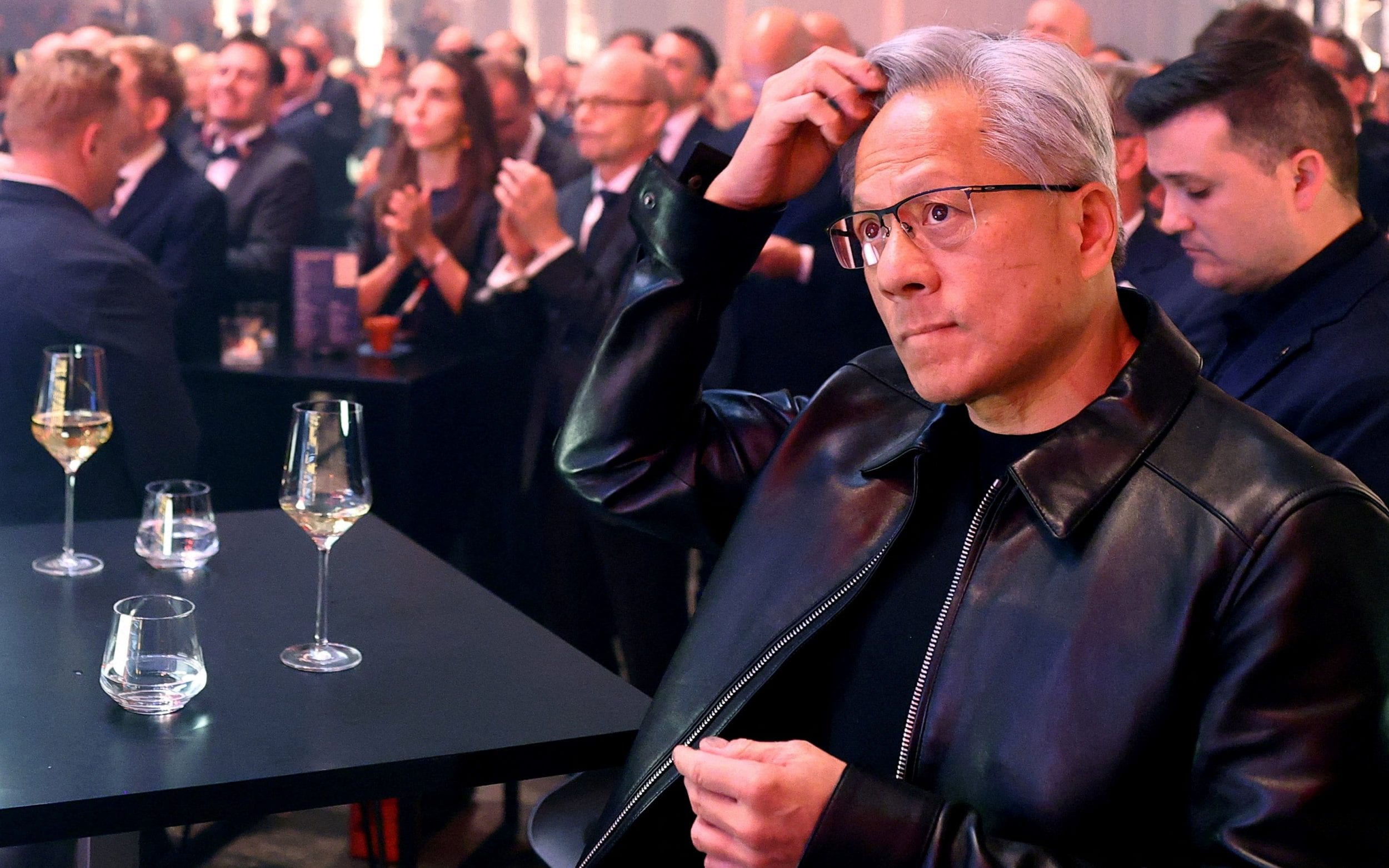
Jensen Huang faces an uncertain future as Nvidia boss after more affair claims surfaced on Wednesday - REUTERS/Lisi Niesner
Jensen Huang founded Nvidia 33 years ago and has turned it into one of the world’s most valuable and important companies.
Yet the tech executive has claimed he has never felt completely safe in his job.
“I still feel like I’m an employee of this company,” he told a podcast in June. “If the CEO doesn’t do his job according to [the board], the CEO is let go. That state of mind keeps you grounded; it keeps you humble.”
Huang’s comments were simply theoretical at the time. Today, there is a real risk that he could in fact be let go.
The other 10 directors on Nvidia’s board now have Huang’s fate in their hands after he was engulfed in a “sexpionage” case that has gone all the way to the White House.
The AI chip giant’s board announced on Sunday that it had opened an investigation into Huang’s romantic relationship with Alice Huang (no relation), an alleged Chinese spy. Beijing has denied espionage.
Nvidia said a committee of independent directors would oversee the inquiry, and on Tuesday said it had hired Joon Kim, a former New York public prosecutor known for pursuing organised crime in the early 2000s, to lead the investigation.
The board met late on Wednesday in California and was reportedly preparing to oust Huang, following claims from the New York Times that he had a fling with a second woman, Nvidia executive Kimberly Powell.
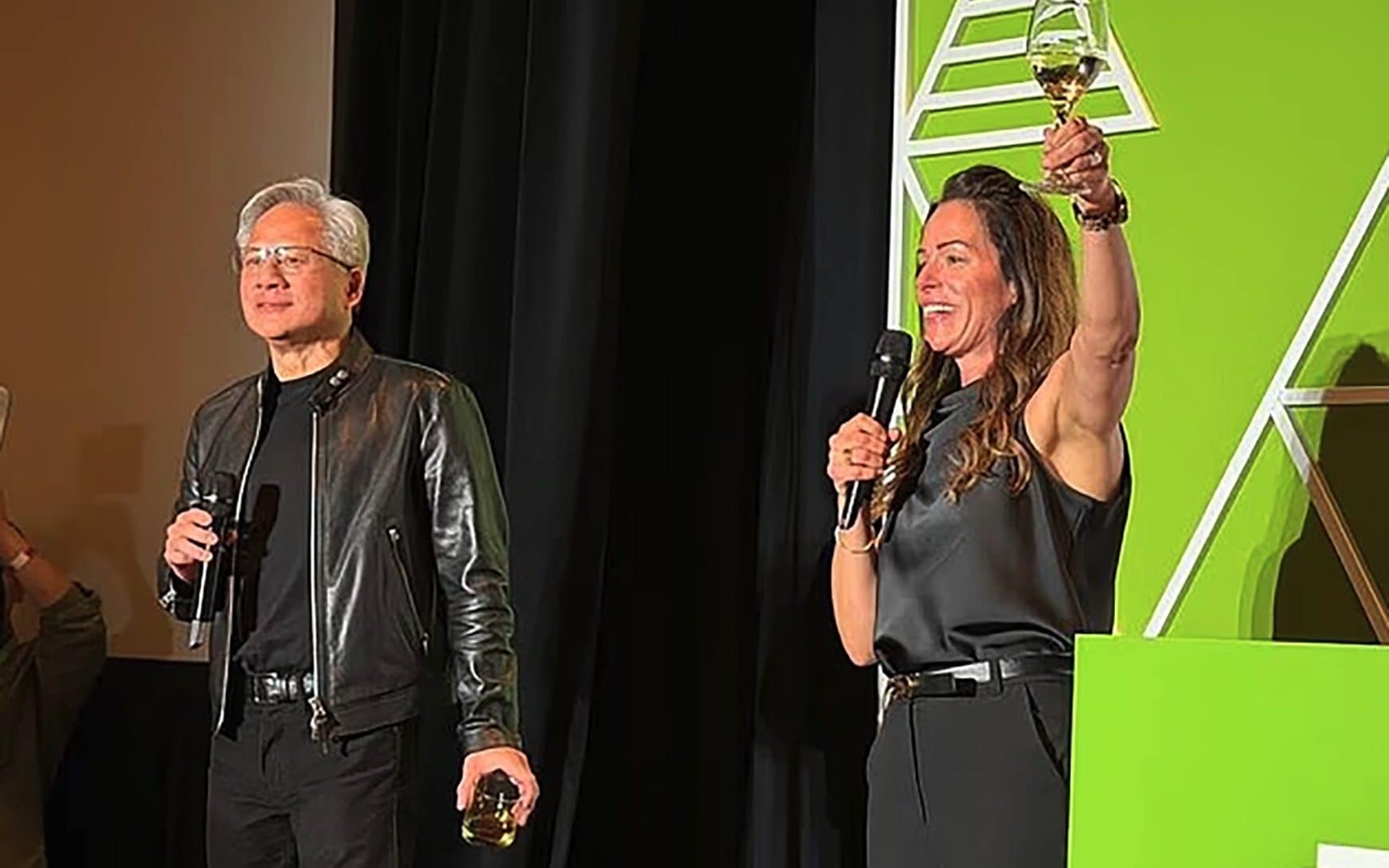
Jensen Huang and Kimberly Powell, pictured on stage at an Nvidia conference, are alleged to have had an affair - LinkedIn
Nvidia’s shares dropped heavily again after the allegations, falling by almost 9pc in after-hours trading. Powell was contacted for comment.
The scandal has knocked hundreds of billions of dollars off Nvidia’s market value and has shone a light on Nvidia’s low-profile board, which now has the future of Huang – and in some ways of the AI industry itself – in its hands.
Sacking Nvidia’s founder could knock £1tn off the company’s valuation, analysts have said. Some investors have warned they can’t see how Huang can continue, given the potential implications of his affair on national security.
Until Wednesday, few believed Huang would actually be ousted. Prediction markets gave the odds of the 63-year-old’s departure by the end of the year at just 17pc, rising to 30pc by the end of 2028.
In part, this is because of many board members’ long-standing and close relationships with Huang.
Every one of the 11-member board besides him is classed as independent. However, several directors have close relationships to Huang, and some have sat on the board with him for more than three decades.
“I think most people would reasonably think that decades of board service, coupled with intertwined personal and business relationships, would make it hard for board members to be objective about investigating wrongdoing,” says Ann Lipton, a professor at the University of Colorado’s law school who studies corporate governance.
“Especially where, as in Huang’s case, the target of the investigation is so critical to the company’s operations.”
The Nvidia founder does not have the same technical control over his company as the founders of other tech companies such as Meta’s Mark Zuckerberg and Google’s Sergey Brin and Larry Page, who own a majority of shareholder voting rights. Huang is one of Nvidia’s biggest shareholders but has just a 3.6pc stake.
Advertisement
As a result, the Nvidia chief could be ousted by the board with little difficulty. But who is on the board, and would they take such a decision?
The board members
The longest-serving members of the Nvidia board include Tench Coxe, a former venture capitalist who was one of Nvidia’s earliest investors and has sat on the board since it was founded in 1993; and Harvey Jones, a former executive at semiconductor company Synopsys. Brooke Seawell, another former Synopsys executive, has been there for 29 years.
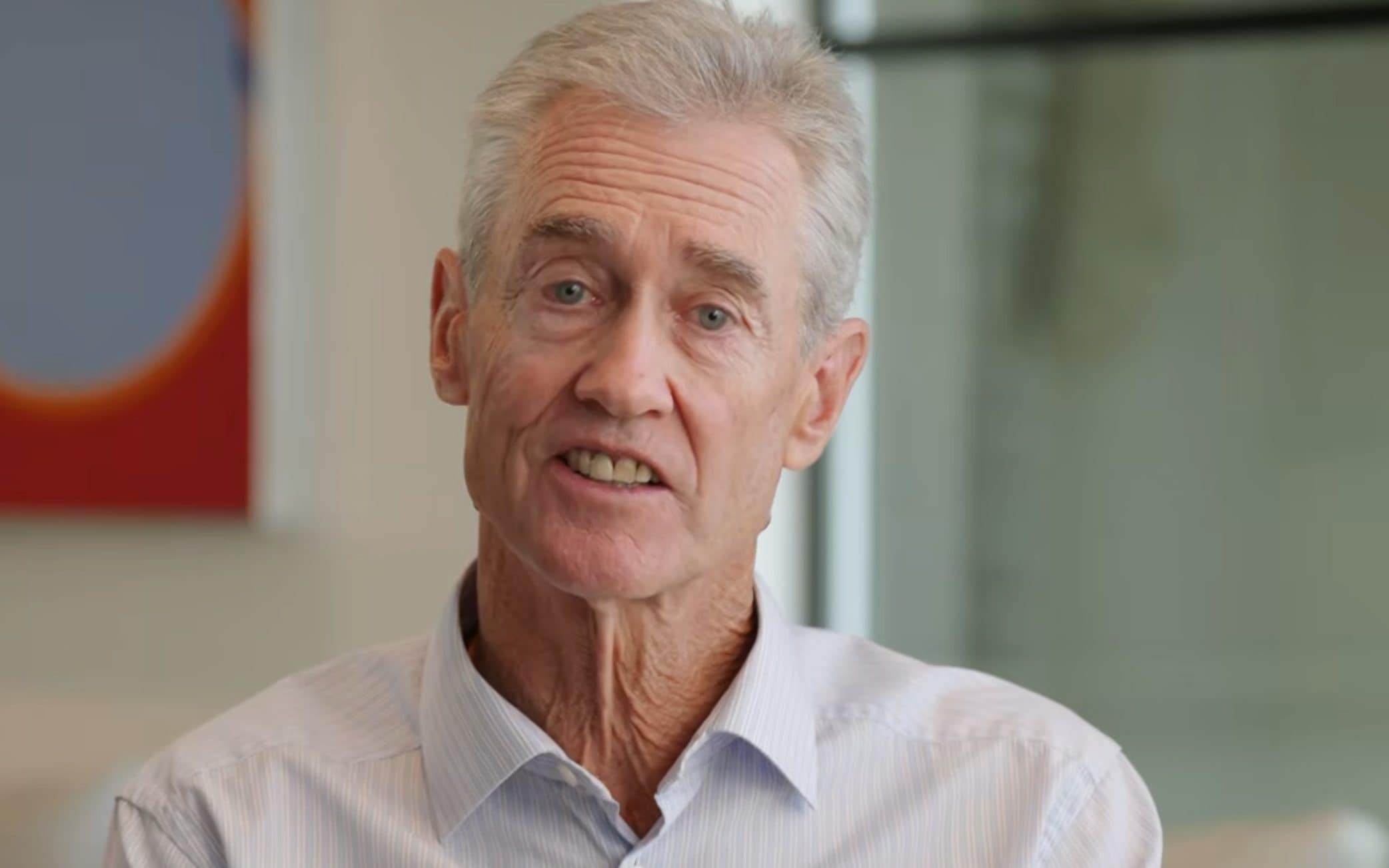
Tench Coxe has been on Nvidia’s board since the company was founded
Mark Stevens, another early investor, has sat on the board since 1993 barring a two-year hiatus between 2006 and 2008. Stevens was invited back by Huang personally, rather than an independent director (Nvidia has no chairman). “I think it might be the best board in America,” he said in 2024.
In Britain, directors are no longer considered independent after nine years on the board. No such rule exists in the US.
Those who have been on the board for decades have seen Huang defy gravity by turning a scrappy start-up into a giant, repeatedly proven right on strategic decisions such as an early investment in AI technology.
“They’ve been entertained by the company, inspired by the company, and enriched by the company,” Huang said in 2023.
Not all of Nvidia’s board members are long-timers. Its lead independent director – the individual most responsible for keeping Huang in check and most likely to make decisions about the direction of the investigation – is Stephen Neal, an experienced corporate lawyer.
Neal, the former head of law firm Cooley, once represented Elizabeth Holmes, the disgraced Theranos founder, in a class action lawsuit. The firm dropped her in 2019 after its legal bills were not paid for a year.
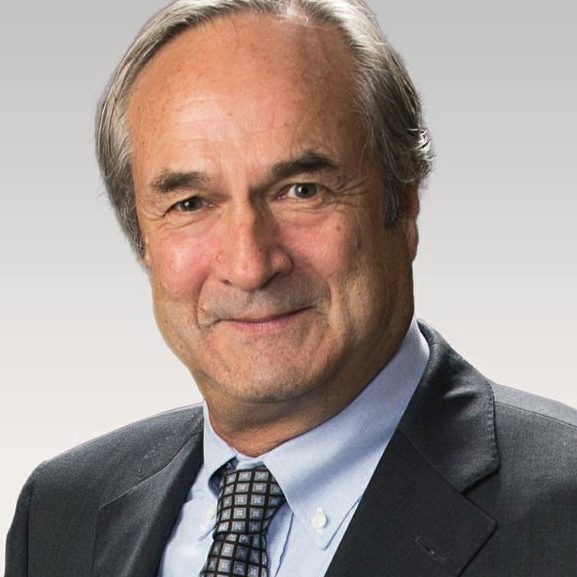
Stephen Neal, an experienced corporate lawyer, once represented Elizabeth Holmes
The firm has been closely linked to Nvidia’s rise, incorporating the company in 1993 and handling its flotation in 1999.
Those with less of a history with Nvidia include Dawn Hudson, the former boss of Pepsi North America; Suzanne Johnson, a former vice chairman at Goldman Sachs; and Melissa Lora, who spent 31 years at the US restaurant chain Taco Bell (Nvidia was started at rival diner chain Denny’s).
The remaining two, who boast more scientific expertise, are John Dabiri, an aeronautics professor and former science adviser to Joe Biden; and Aarti Shah, a former executive at drug firm Eli Lilly. (Shah’s son works at Nvidia.)

Dawn Hudson, the former boss of Pepsi North America, is another Nvidia board memberConcerns around the board
“It is unclear that the level of governance required from Nvidia’s board matches the company’s meteoric rise,” says Donald Schepker, of the Centre for Executive Succession at the University of South Carolina.
Shareholders have raised concerns about the board. Investment giant Aviva voted earlier this year against the re-election of Coxe, Hudson, Jones, Seawell and Stevens over independence concerns. It has criticised Neal over Nvidia’s corporate governance record.
Dutch investor SPMS said in 2023: “The average board tenure at the company significantly exceeds the market average, raising concerns regarding board refreshment and succession planning.”
Legal & General has repeatedly voted against directors because of a lack of women on the board (female representation has since increased).
The board’s statement on Sunday announcing its investigation has already invited scepticism. It said it had “no reason to believe that either national security or Nvidia secrets were compromised”, seeming to pre-empt the investigation’s conclusions.
It said Huang will remain in his post while the investigation continues, adding: “The board has confidence in Jensen.” However, the wave of revelations about Nvidia’s boss mean they may now have no choice.
Source: “AOL Money”
