


Starling flies into trouble after bank’s wings clipped
Starling flies into trouble after bank’s wings clipped

Tom SaundersThu, November 12, 2026 at 9:00 AM UTC
0

When Anne Boden, the founder of Starling Bank, published a book chronicling how she set up Britain’s first digital-only bank, she subtitled it How I Disrupted an Industry.
Six years after that book was published, it is Starling itself that is being disrupted.
Boden is long gone and has sold her final stake in the business this year at a valuation of only £1.7bn — less than half the £4bn valuation it was said to be targeting last year.
Now Raman Bhatia, who replaced Boden as Starling’s chief executive, is now heading for the exit after just two years in the role.
His departure follows a large number of the bank’s board members over the last year, some of whom reportedly had disagreements with Starling’s largest shareholder, Harald McPike.
And the bank is still subject to restrictions imposed by the City watchdog that have clipped its wings and left it struggling to grow.
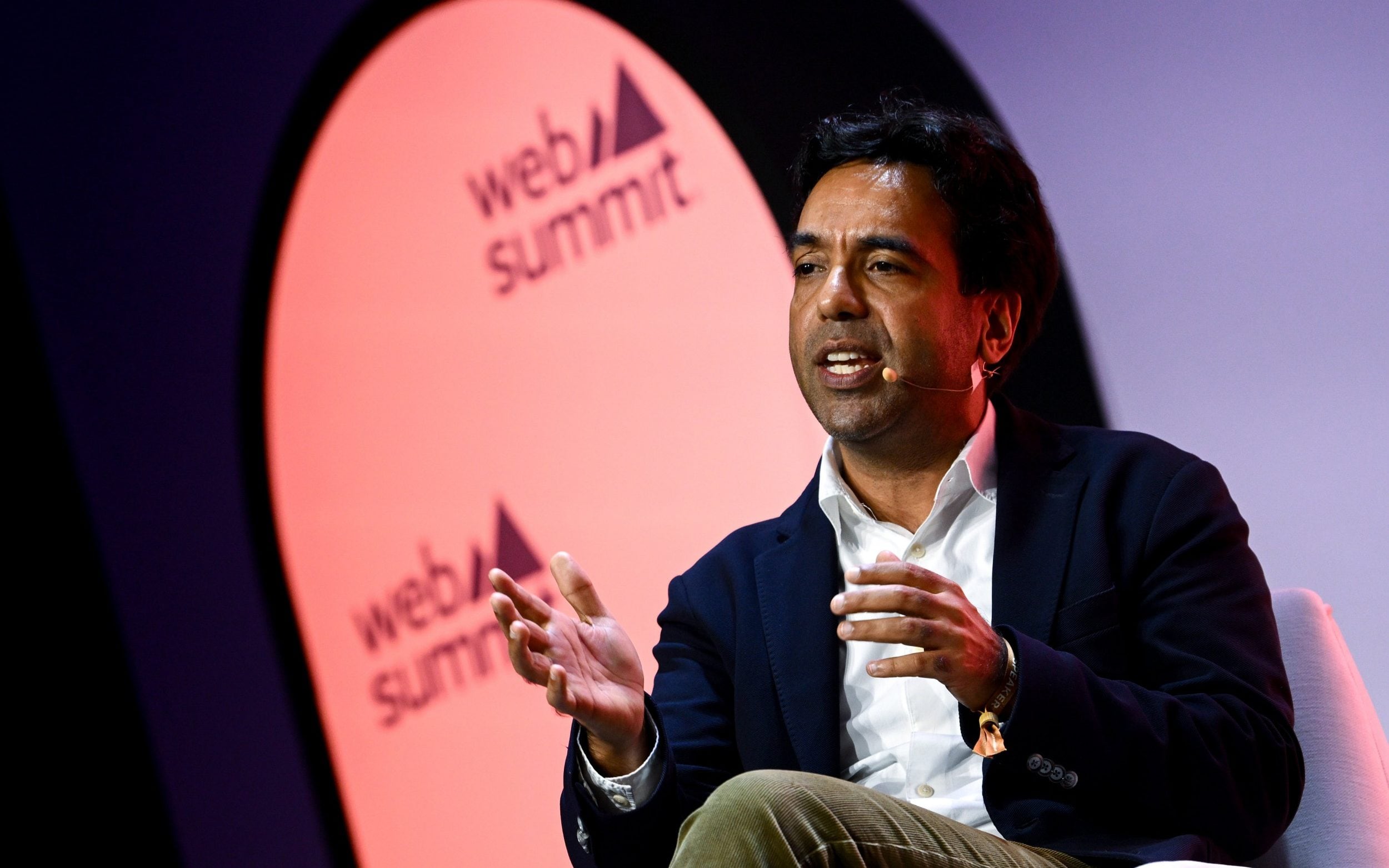
Raman Bhatia is now exiting as Starlink’s chief executive after two years in the role - Getty/Raman Bhatia
The upheaval comes even as rivals start to pull away. Revolut recently completed a fundraising round at a valuation of $115bn (£87bn). Monzo, founded by Tom Blomfield, a former Starling Bank employee, is reportedly in talks to raise money at a £7bn valuation.
With Starling lagging, the City is alive with speculation about what might happen to the lender. McPike, a Bahamas-based Austrian billionaire who owns 37.5pc of the bank, is said to have lost interest in a London stock market listing. Could a deal with the likes of Monzo or another bank be on the cards?
Boden, a Welsh former executive of Allied Irish Banks, founded Starling in 2014 as a bank tailored for smartphones.
Government policy changes intended to encourage competition in banking gave rise to several rivals but Starling Bank always positioned itself as a more mature business than the competitors nipping at its heels, thanks in part to Ms Boden’s banking pedigree.
Boden said it was “pulling away from the rest of the Fintech pack” in 2021 after it reported a 600pc rise in revenue to £97.6m.
But the announcement proved a high point for the bank. Roughly two months later, the City watchdog banned Starling from onboarding higher-risk customers, and it was fined £29m in 2024 for “shockingly lax” controls around risky customers. Restrictions remain in place today.
Separately, Starling Bank had distributed £1.6bn in UK Bounce Back Loans (BBLS) during the Covid-19 pandemic. The government-guaranteed loans were intended to support business during the pandemic but later faced scrutiny over weak fraud-checks and non-compliant loans. Restrictions remain in place today.
Boden departed the bank in 2024 to focus on developing a new AI business and recently announced on LinkedIn that she was hiring engineers for a new startup that would be “right at the start of the next revolution in banking technology”.
While Boden has moved on, the bank she founded is still searching for direction.
In December 2025, Bhatia said Starling was exploring applying for a US banking licence. However, by April, Declan Ferguson, the company’s chief financial officer, said that it was not seeking a licence and would instead pursue a “more modest acquisition” focused on business-to-business products, not retail. (Ferguson is seen as a front-runner to replace Bhatia.)
Questions over US expansion are also overshadowing Engine, a part of Starling that sells its banking technology to other lenders.
Advertisement
It is regarded as a key driver of potential future growth. However, since it launched as a separate business in 2022, Engine has signed up only four clients and is yet to acquire a US customer, even though it opened a New York office in 2025 and hired Deloitte and PwC to find prospects.
Its current customers include banks from Romania, Australia, Canada and New Zealand, but it hasn’t announced a new client since February.
Meanwhile, Starling’s UK bank – its core business – is finding it harder to compete for customers.
In its latest accounts for the 12 months to March, Starling reported a 5pc increase in deposits to £12.7bn, but all of its growth came from a 45pc increase in savings-account deposits.
Personal current-account balances fell 6pc, eroding its cheapest form of funding and leaving it more exposed as rates fall. In a recent bond offering, it warned that a faster-than-expected fall in rates “could present a threat to the group’s earnings and profitability”.
Rupert Ghose, an adviser to fintech companies and a former financial research analyst, said Boden “used to say, ‘We may not just chase customer numbers, but we’re going to get deposits, which is the heart of traditional banking, and we’re going to make money on the deposits.’And they never really did that. And they haven’t done the other stuff the young cool kids did”.
The bank, which has a sponsorship deal with Arsenal FC, has 4.9 million UK accounts, of which about 500,000 are businesses. By comparison, Monzo has more than 15 million customers.
As it faces increasing competition for deposits, Starling is pushing into lending. Mortgages makeup 95pc of its loan book and it bought Fleet Mortgages, a buy-to-let lender, for £50m in July 2021. Starling purchased a £230m unsecured consumer loan book in May.
The bank is also exploring buying mainstream unsecured lenders, non-bank lenders and specialist owner-occupied mortgage lenders.
With Starling seemingly fighting harder to stand still, the bank has become a takeover target. Last year, Shawbrook, the specialist lender, made a tentative approach about a merger that would have created a combined group worth about £5bn.
A potential combination with one of Britain’s many specialist banks – or larger fintechs – has also been the subject of much discussion in the City. Ghose recently suggested that Monzo might make a potential partner.
“Investment bankers have got nothing else to do. There’s no IPOs in the UK ... They might as well go around to Monzo and Starling and hatch it out and merge the two,” he said.
“Starling’s making a couple of hundred million in profit. Monzo is actually not making much profit. You put the two together ... I just think the cost savings would be significant. I think you’d get scale.”
Its backers insist the business is worth far more than the £1.7bn implied by Boden’s recent transaction. Chrysalis, the investment trust that owns about 12pc of Starling and is winding down its portfolio, wrote up its stake last week to a level Jefferies said implied a £3.4bn valuation.
But even Jefferies’ analysts said the route to cashing in “is still unclear”. For a bank that once cast itself as the adult at the table, the next chief executive’s first task may be deciding what Starling wants to be when it grows up.
A spokesman for Starling Bank said: “The Starling Group is on track for a sixth straight year of profitability on strong customer growth and diversification. Starling Bank is tripling retail and SME account openings year-on-year as it attracts new customers to its innovative products and AI-powered in-app features, all backed by 24/7, UK-based human service.
“Engine by Starling is also scaling rapidly, having doubled its client count in the last financial year, with more announcements of long-term contracts to come.”
Source: “AOL Money”
