


Investors, Fed watchers want one thing from Kevin Warsh in his Jackson Hole debut: Clarity
Investors, Fed watchers want one thing from Kevin Warsh in his Jackson Hole debut: Clarity

Jennifer SchonbergerThu, August 27, 2026 at 9:57 PM UTC
0
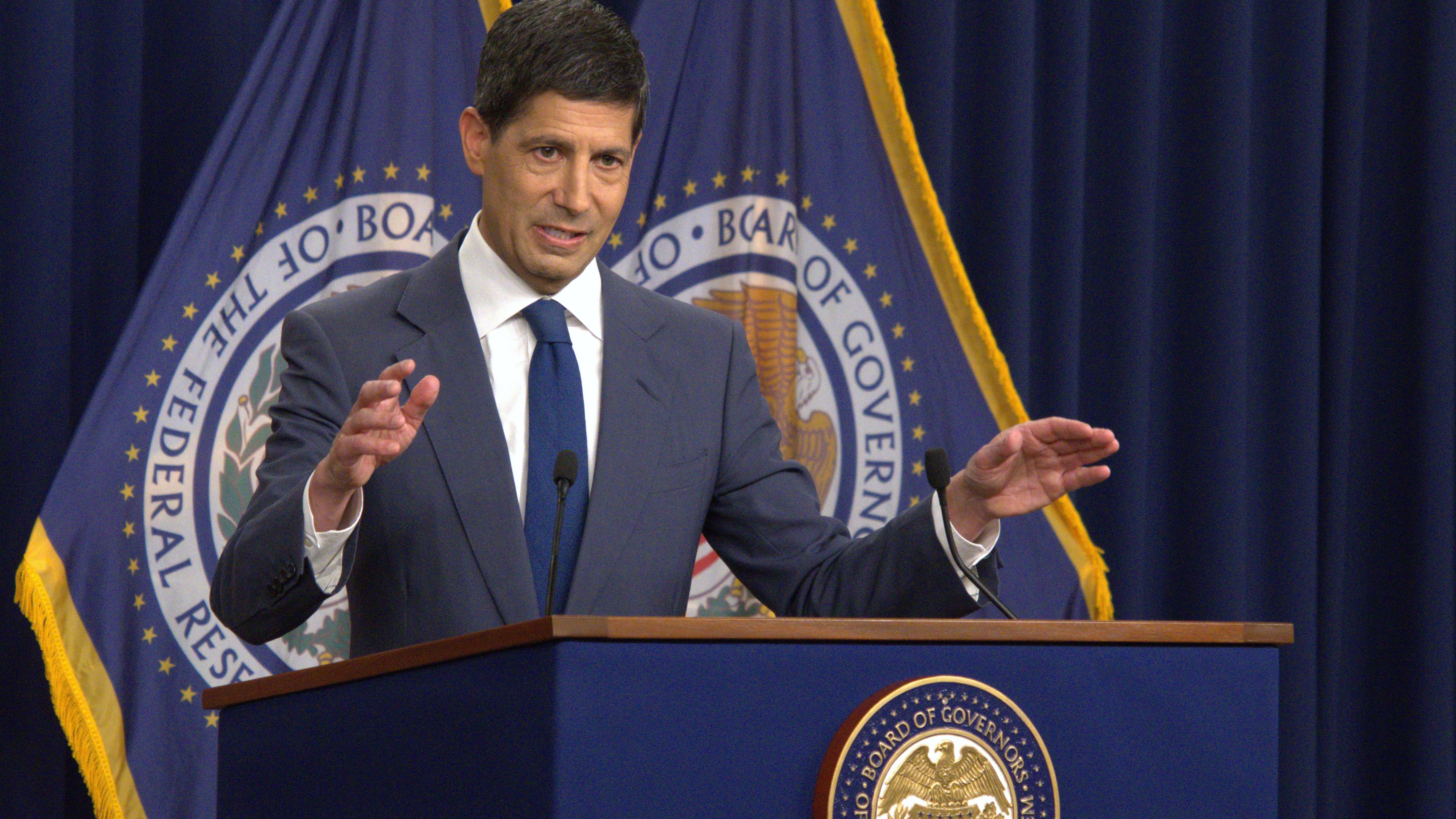
U.S. Federal Reserve Chair Kevin Warsh attends a press conference in Washington, D.C., the United States, July 29, 2026. (Li Yuanqing/Xinhua via Getty Images)
The stage is set for Federal Reserve Chairman Kevin Warsh's first Jackson Hole speech on Friday, offering the new head a chance to clarify the central bank's strategy to bring down inflation and rebuild confidence in the Fed itself.
This year's gathering takes place against a challenging backdrop as inflation remains well above the Fed's 2% goal for the sixth consecutive year after a series of shocks. The latest inflation data offers conflicting evidence, fueling arguments for both patient policymakers who favor holding rates steady and hawks who want to hike rates as soon as possible.
Officials are deeply divided on whether to hold rates steady for now to see if inflation will come down on its own, or to act immediately. This internal tension — the "good family fight" that Warsh desires — resulted in three dissents at the last policy meeting.
Read more: How the Fed rate decision affects your bank accounts, loans, credit cards, and investments
The gathering also comes amid a distinct lack of clarity about the Fed's willingness to raise rates. During his July press conference, Warsh repeatedly pointed to bond yields shooting materially higher, suggesting it was a good thing and implying that the Fed welcomes higher yields to tighten policy through markets. His stance initially triggered higher long-term bond yields and ultimately led to confusion and damaged market confidence in the Fed's strategy.
"I would like to hear him explain and start with, 'Here's why we made the decision we made in July,'" Robert Kaplan, former head of the Dallas Fed, told Yahoo Finance.
Kaplan said the Fed chairman doesn't need to predict the future or offer forward guidance. Rather, he needs to "be a faithful reporter of how the committee is working, as opposed to leaving it to people to rely on individual Fed presidents and governors making their own statements.
"I think it would be better if he stepped into that role a little bit more," he continued.
Matt Luzzetti, chief economist for Deutsche Bank, said Warsh's first priority must be a "cleanup" of that July press conference. Luzzetti said unease in the bond markets stems from Warsh's unwillingness to commit to retaining the Personal Consumption Expenditures index as the Fed's favored inflation yardstick, alongside not specifying that rate hikes are the primary method to bring down inflation.
"These ambiguities could be resolved easily at Jackson Hole," Luzzetti said, suggesting either a big-picture talk focused on the Fed's new task forces or a policy-oriented commentary that cleans up recent communication missteps.
Advertisement
Luzzetti said he is looking for a broad description of how officials view inflation dynamics. He noted that Warsh could refer to the two scenarios detailed in the June meeting minutes: one in which inflation soon dissipates, leading "most" officials to favor holding or lowering rates, and another in which inflation remains elevated, requiring higher rates.
Kurt Lewis, head of central bank policy for Piper Sandler, agreed that Warsh needs to rebuild confidence. However, he expects that Warsh's speech will not resemble previous Jackson Hole remarks in which Fed chairs intentionally gave investors a lean toward the near-term policy outlook. Warsh has argued that policymakers should speak less frequently and has chosen not to disclose his personal views. He contends that sharing the expected path for interest rates locks in market expectations and central bank actions, which can lead to poor and costly policy decisions.
Lewis said he expects Warsh's remarks to touch on economic developments and briefly mention their potential policy implications, without giving forward guidance — which Warsh has steadfastly declined to provide.
He expects Warsh to reiterate that the fed funds rate remains the primary tool for adjusting policy.
"Like 'many' of his colleagues, he would be willing to raise rates if inflation made it necessary," Lewis said. "Without it, he risks being misinterpreted (again), or coming off as disconnected from the current policy debate."
Aside from the immediate economic discussion, Lewis expects Warsh to focus heavily on big-picture questions. Specifically, he expects Warsh will likely emphasize the value of his five newly created task forces, which are exploring ways to improve the Fed's communications, inflation framework, balance sheet policy, and the impact of AI on jobs and productivity.
Within this context, he expects Warsh to address long-term issues like productivity, demographics, potential AI effects, and structural questions around inflation measurement.
Jennifer Schonberger is a veteran financial journalist covering markets, the economy, and investing. At Yahoo Finance, she covers the Federal Reserve, Congress, the White House, the Treasury, the SEC, the economy, cryptocurrencies, and the intersection of Washington policy with finance. Follow her on X @Jenniferisms and on Instagram.
Click here for the latest economic news and indicators to help inform your investing decisions
Read the latest financial and business news from Yahoo Finance
Source: “AOL Money”
